Paste your data
Paste or type your XML data into the input field, or upload a .xml file from your computer. The converter validates XML syntax before conversion.
Convert XML to JSON format. Automatic parsing and formatting. Free, no registration.
XML is the standard in enterprise systems (SAP, Oracle, SOAP APIs), B2B data exchange (EDI, UBL), banking (ISO 20022), and government portals. However, modern web applications, REST APIs, and NoSQL databases work with JSON. Converting XML to JSON bridges legacy systems with modern frontends and mobile apps.
JSON is lighter than XML — no closing tags, no attributes, no namespaces. Converting XML API responses to JSON simplifies data processing in JavaScript, Python, and other languages. React, Vue, and Angular apps consume JSON natively without additional parsing libraries.
The converter maps XML elements to JSON objects, attributes to special keys, and text content to string values. Repeating elements are automatically converted to arrays.
All processing happens locally in your browser — nothing is sent to any server. No registration, no limits, no tracking.
| Feature | XML | JSON |
|---|---|---|
| Nested/hierarchical data | ✓ | ✓ |
| Tabular data | — | — |
| Schema validation | ✓ | ✓ |
| Human readable | ✓ | ✓ |
| API standard | ✓ | ✓ |
| Compact syntax | — | ✓ |
XML (eXtensible Markup Language) uses a tag-based hierarchy with opening and closing elements, while JSON (JavaScript Object Notation) uses lightweight curly braces and key-value pairs. The converter parses the XML document tree and maps each element to a corresponding JSON structure.
XML elements become JSON objects, repeated elements with the same tag name become JSON arrays, and text content becomes string values. XML attributes are typically mapped as special properties (prefixed with @) within the JSON object to distinguish them from child elements.
JSON is the preferred format for modern web APIs, JavaScript applications, and NoSQL databases. Converting XML to JSON makes data easier to work with in frontend frameworks and REST APIs. The conversion runs entirely in your browser — no data is sent to any server.
A few tips to help you avoid common issues during conversion:
Yes, this converter is completely free with no limits. No registration, no watermarks.
No. All processing happens locally in your browser. Your files never leave your device.
Yes, the converter supports batch conversion. Add multiple files and convert them all simultaneously.
Yes, the converter works on any device with a modern web browser, including smartphones and tablets.
Yes. The entire conversion runs locally in your browser. Your data is never sent to any server. When you close the page, all data is automatically cleared from memory.
No. XML attributes are preserved in the JSON output as properties with an @ prefix. For example, an attribute id='123' becomes "@id": "123" in the JSON object.
Yes. The output is standard JSON that can be parsed with JSON.parse() in JavaScript or used directly in any programming language, API, or database that supports JSON.
Have an idea, found a bug, or want to suggest a feature? Drop us a message – we respond within 24 hours.
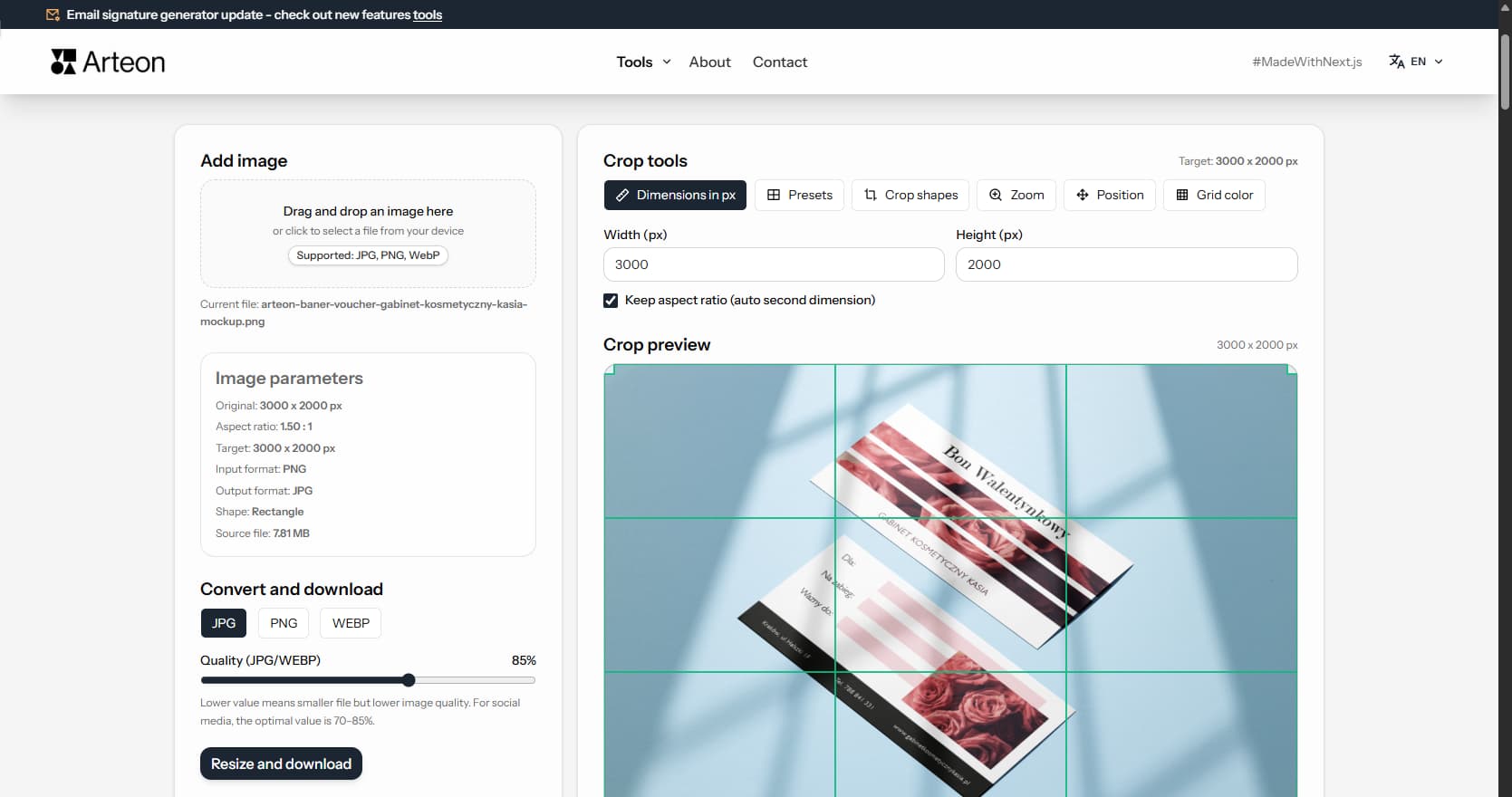
Resize, crop and convert your image. Ready-made formats for social media, circular avatars, export to JPG/PNG/WebP.

Check title and description length in pixels. Live Google preview and optimization tips.
Convert PNG files to JPG in your browser. No file limits, no signup, no server uploads.
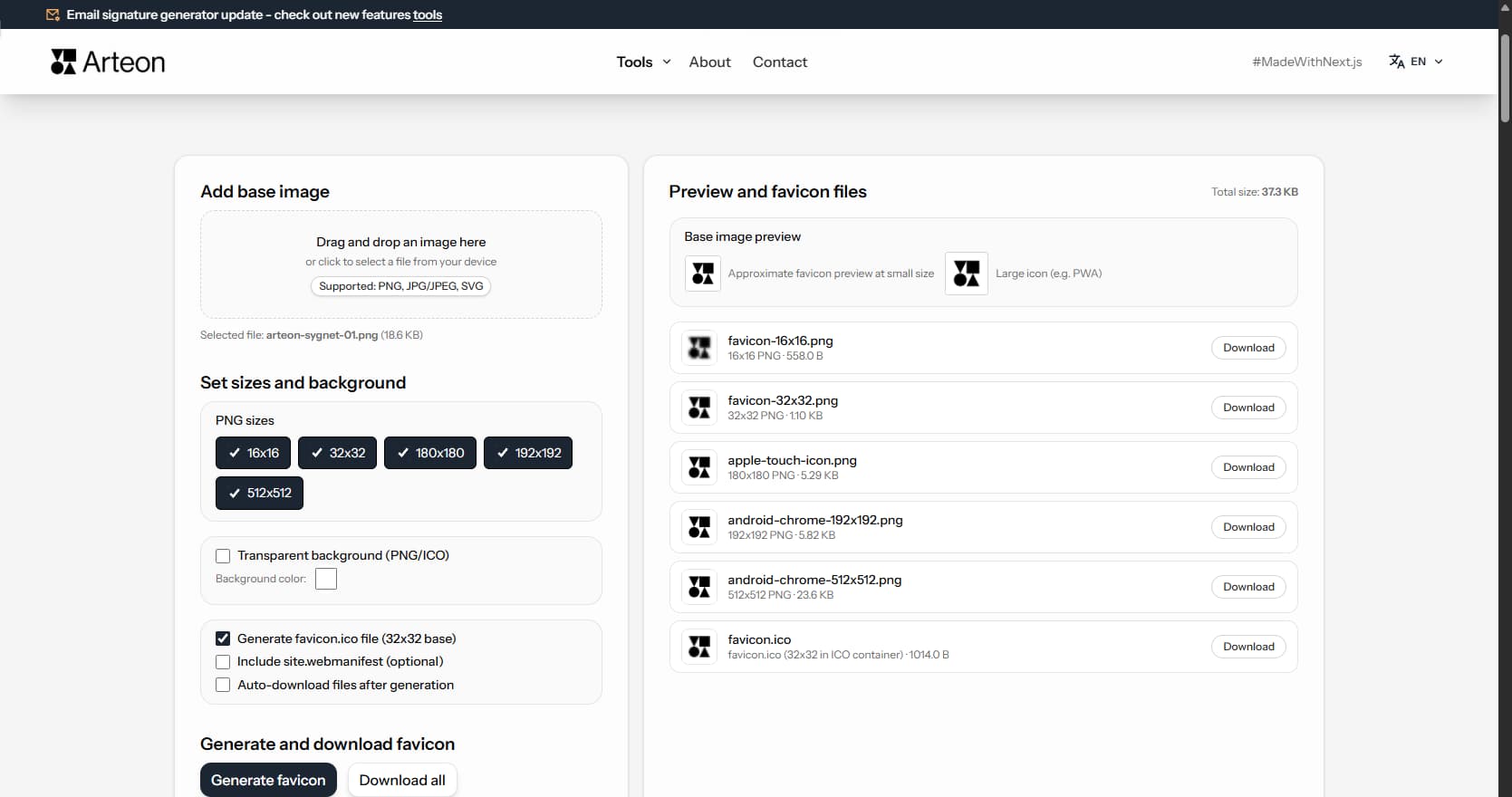
Create a complete favicon.ico set for your website from one image. All required sizes, no login.
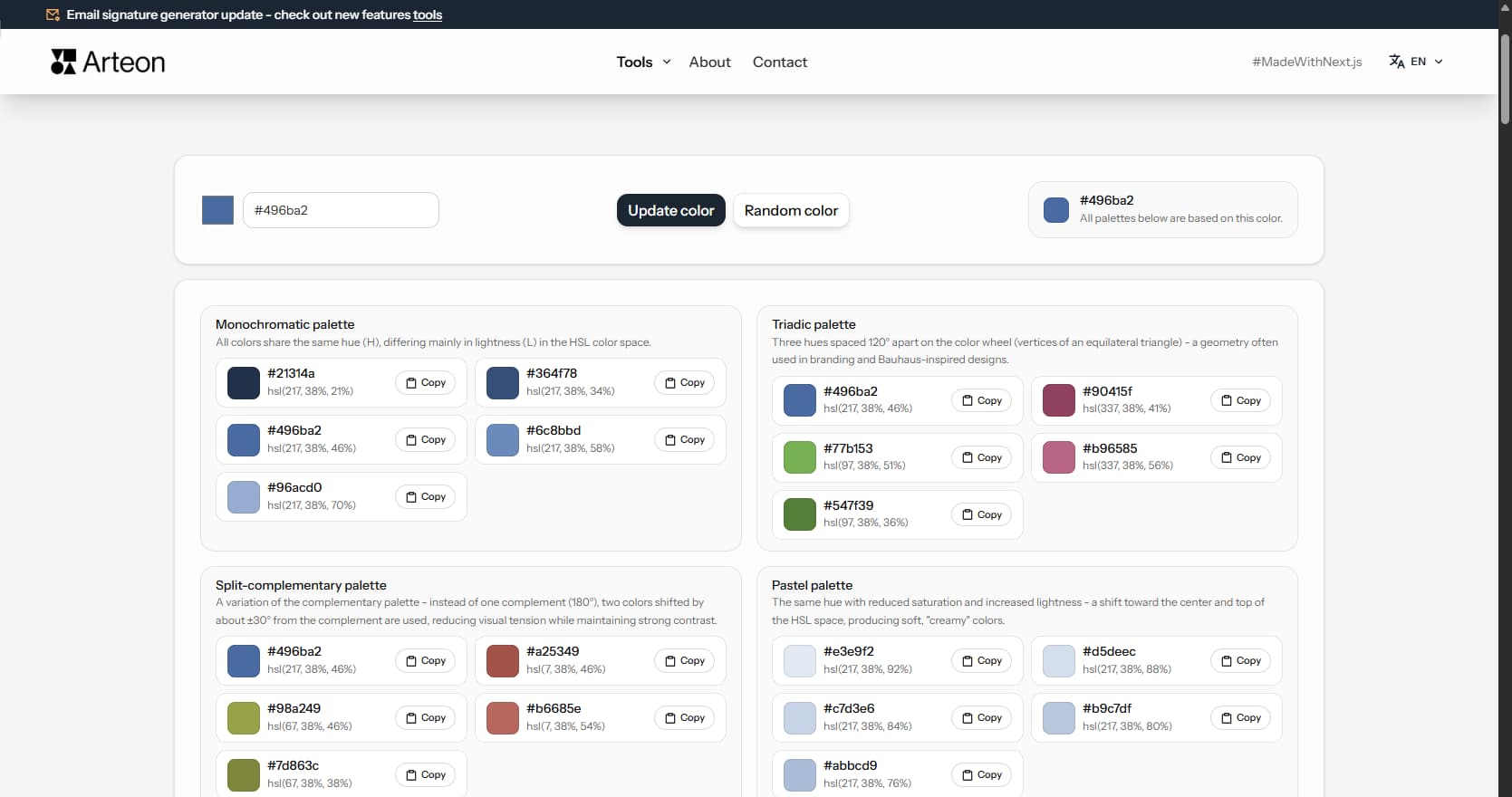
Generate 9 palettes from one color: monochromatic, complementary, triadic and more. HEX codes.
Convert WebP files to universally compatible JPG. Works in every app and platform.
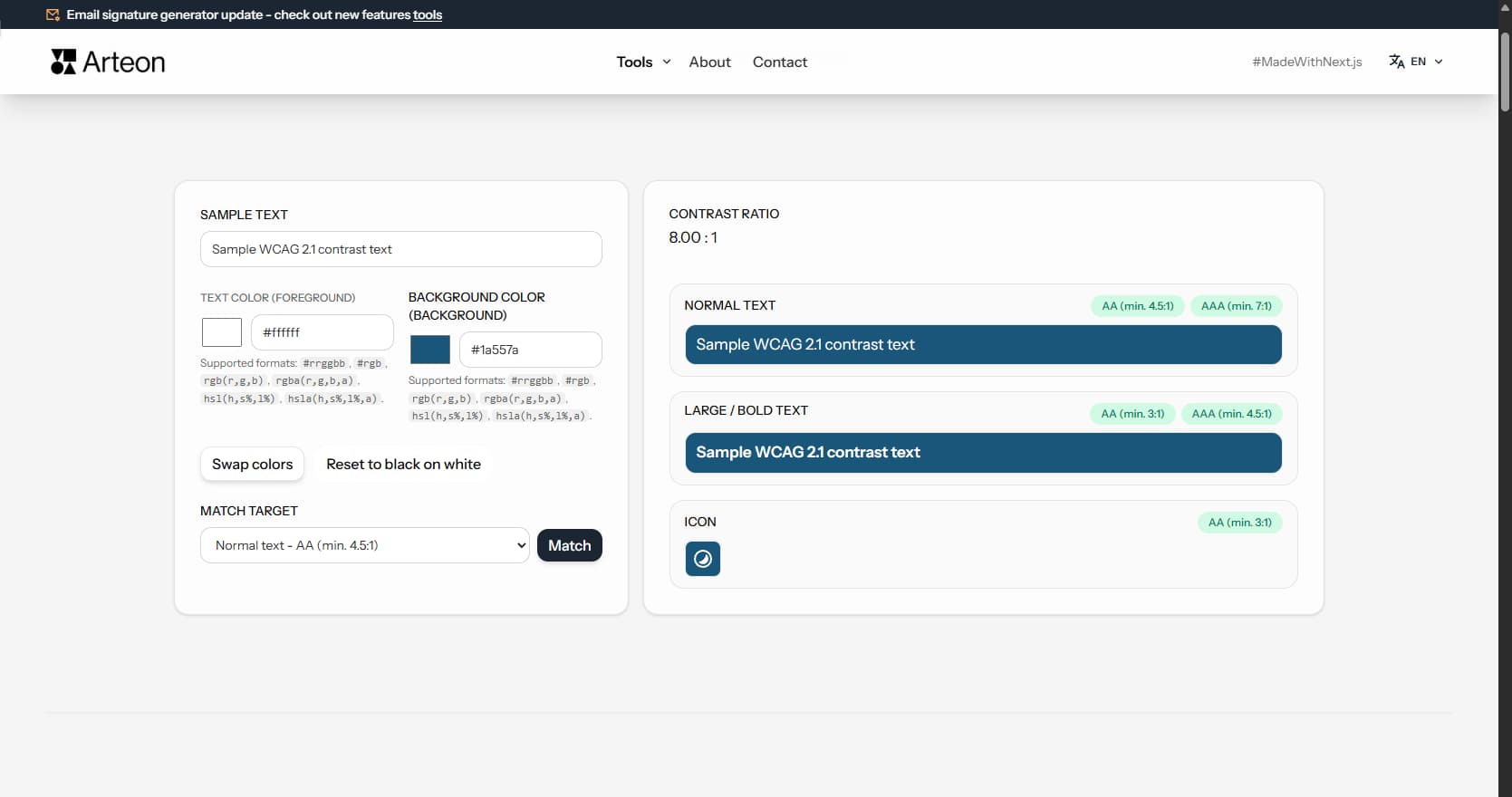
Check text and background contrast per WCAG 2.1 AA and AAA. Automatic color correction.
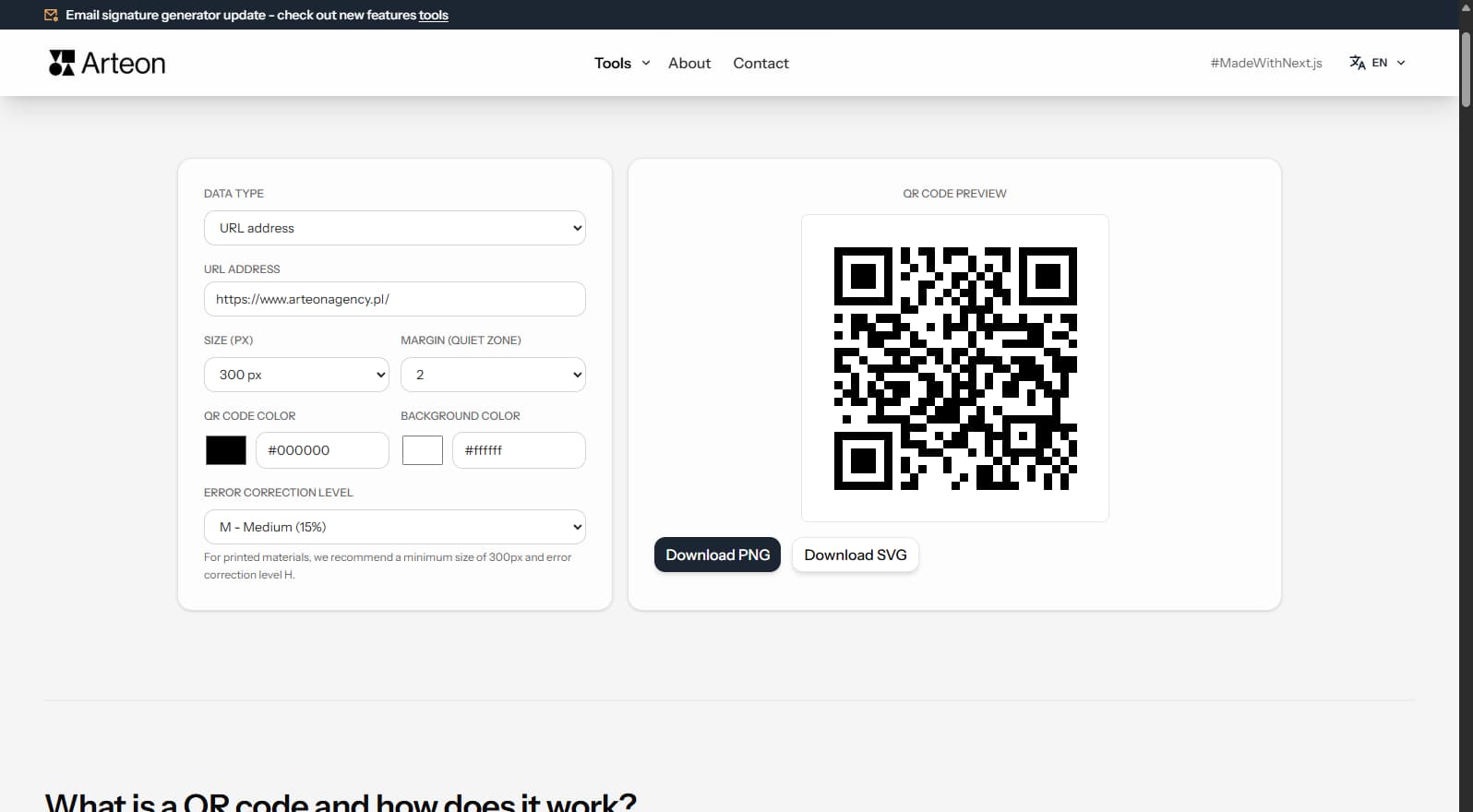
Create a QR code for a website, vCard business card or print. Export PNG and SVG, no registration.
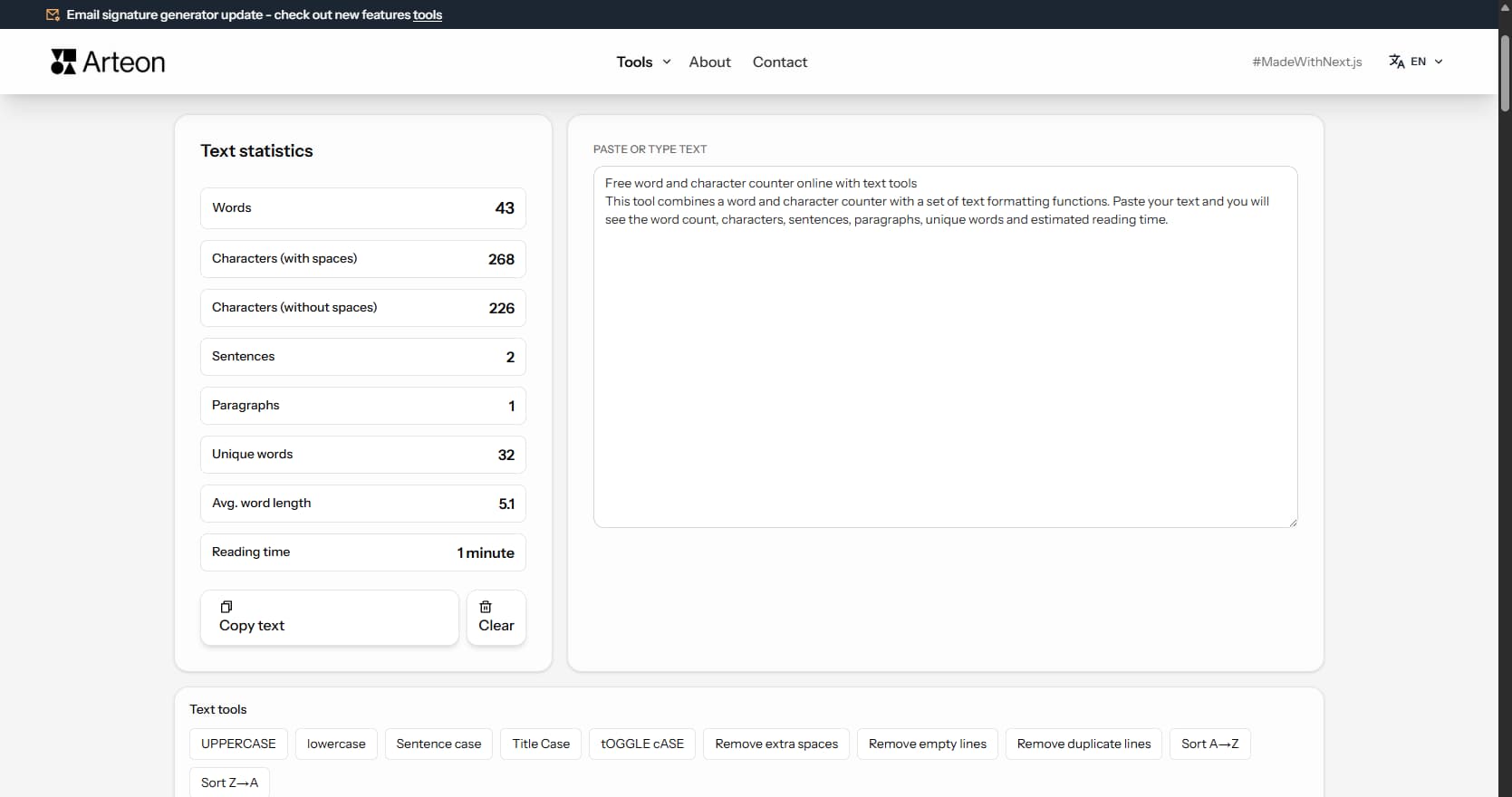
Count words, characters, sentences and reading time. Check readability with the Flesch-Kincaid score.