Limits in code and config
Many libraries and config files take a size limit in bytes. If you want to set a 50 KB threshold, you enter 51,200 B — the converter gives the exact number without manual math.
Type a number of kilobytes and read the result in bytes straight away. A kilobyte is 1,024 bytes in the binary system, so the converter multiplies your value by 1,024. Use Swap order to convert bytes to kilobytes instead.
A kilobyte is 1,024 bytes, and a byte is the basic unit of data size. A size in kilobytes is easy to read, but in code, configuration or a spec you often need the exact number of bytes — and that is when you convert KB to B.
The relationship is fixed: 1 KB is 1,024 B in the binary system, which operating systems and this converter use. To turn kilobytes into bytes, multiply their number by 1,024. The converter does this the moment you type a value.
Watch out for two systems. In the decimal system (SI), 1 KB is 1,000 B — that is how storage makers count, for example. This converter uses the binary system (1,024 B), matching what Windows and macOS show. Do not mix bytes up with bits either: 1 byte is 8 bits.
The conversion rests on a fixed relationship: one kilobyte is 1,024 bytes. To turn kilobytes into bytes, multiply their number by 1,024.
Full formula: bytes = kilobytes × 1,024. The other way: kilobytes = bytes ÷ 1,024.
Example: you have a 50 KB limit and want it in bytes. Calculation: 50 × 1,024 = 51,200 B. The multiplier 1,024 comes from the fact that computers count in binary, and two to the power of ten is exactly 1,024.
Why 1,024 and not 1,000? In the decimal system (SI), 1 KB is 1,000 B, and that is how storage makers state capacity. Operating systems and this converter use the binary system, where 1 KB is 1,024 B — formally called a kibibyte (KiB).
The table below converts common kilobyte values into bytes in the binary system (×1,024). To convert another value, use the converter above.
| Kilobytes | Bytes |
|---|---|
| 0.5 KB | 512 B |
| 1 KB | 1,024 B |
| 2 KB | 2,048 B |
| 5 KB | 5,120 B |
| Kilobytes | Bytes |
|---|---|
| 10 KB | 10,240 B |
| 20 KB | 20,480 B |
| 50 KB | 51,200 B |
| 100 KB | 102,400 B |
| Kilobytes | Bytes |
|---|---|
| 250 KB | 256,000 B |
| 500 KB | 512,000 B |
| 1,024 KB | 1,048,576 B |
Example: 1 KB × 1,024 = 1,024 B. Want to convert bytes to kilobytes? Click Swap order in the converter above.
An exact number of bytes is needed mostly in technical contexts.
1 kilobyte is 1,024 bytes in the binary system, which this converter and operating systems use. In the decimal system (SI), used by storage makers among others, 1 KB is 1,000 bytes.
1 KB is exactly 1,024 bytes. Calculation: 1 × 1,024 = 1,024 B. This is the base relationship between the kilobyte and the byte, which is why it is looked up most often.
Multiply the number of kilobytes by 1,024. For example, 50 KB × 1,024 = 51,200 B. The converter does this the moment you type a value, with no button to click.
Divide the number of bytes by 1,024. For example, 51,200 B ÷ 1,024 = 50 KB. Click Swap order to have the converter work in this direction.
It depends on the system. Operating systems and this converter use the binary system, where 1 KB is 1,024 B. Storage makers use the decimal system, where 1 KB is 1,000 B. That is why the same number of kilobytes can give a slightly different result in bytes.
5 KB is 5,120 B, 10 KB is 10,240 B, and 100 KB is 102,400 B. You get each of these by multiplying the number of kilobytes by 1,024.
KiB (kibibyte, the IEC standard) is always exactly 1,024 B. KB in the SI system is 1,000 B. In everyday use most people write KB while meaning 1,024 B, which is technically KiB. This converter uses 1,024 B.
If you have spotted an error in the table or have an idea to improve the converter, write to us. We reply to every message.

Resize, crop and convert your image. Ready-made formats for social media, circular avatars, export to JPG/PNG/WebP.

Check title and description length in pixels. Live Google preview and optimization tips.
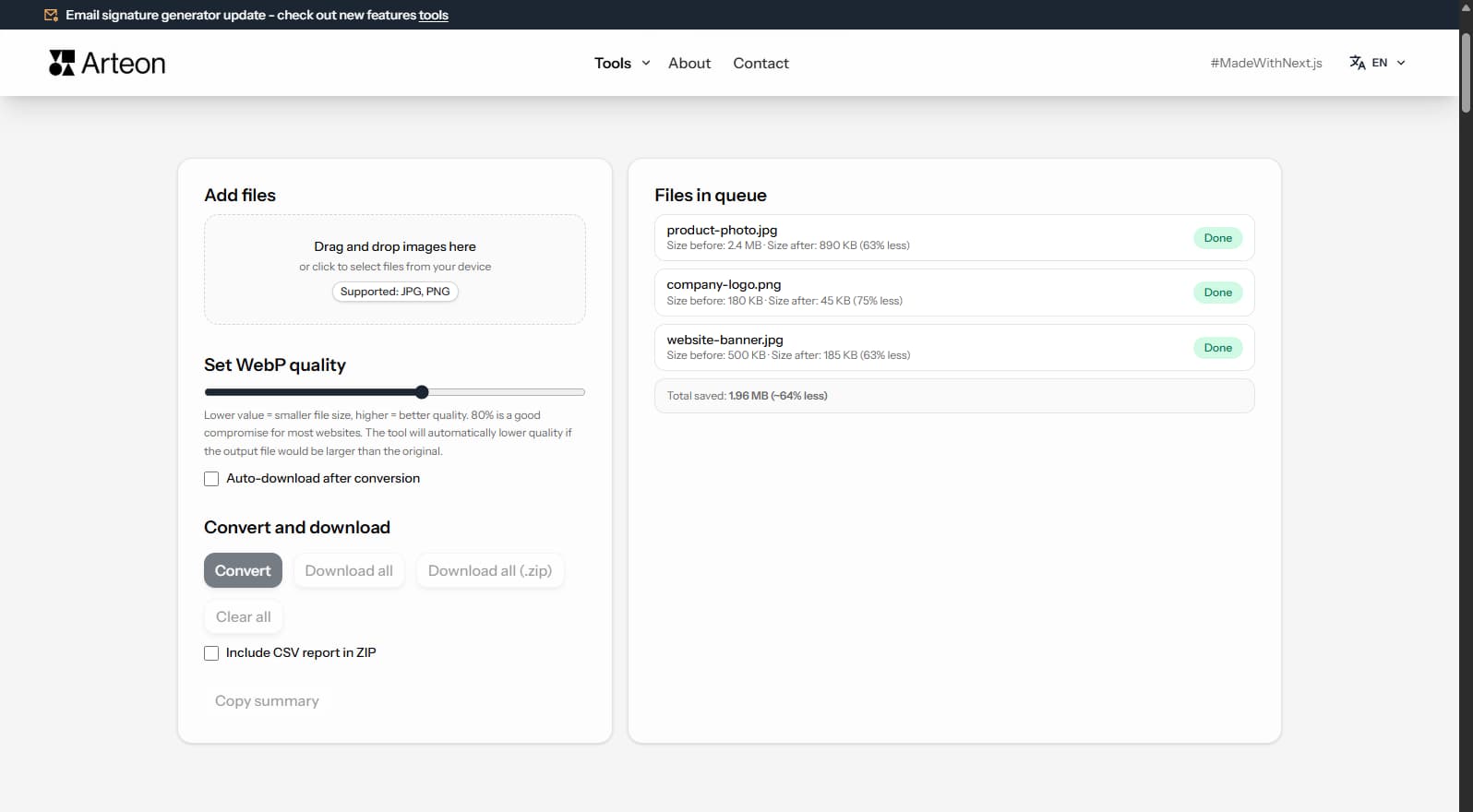
Convert PNG files to JPG in your browser. No file limits, no signup, no server uploads.

Create a complete favicon.ico set for your website from one image. All required sizes, no login.
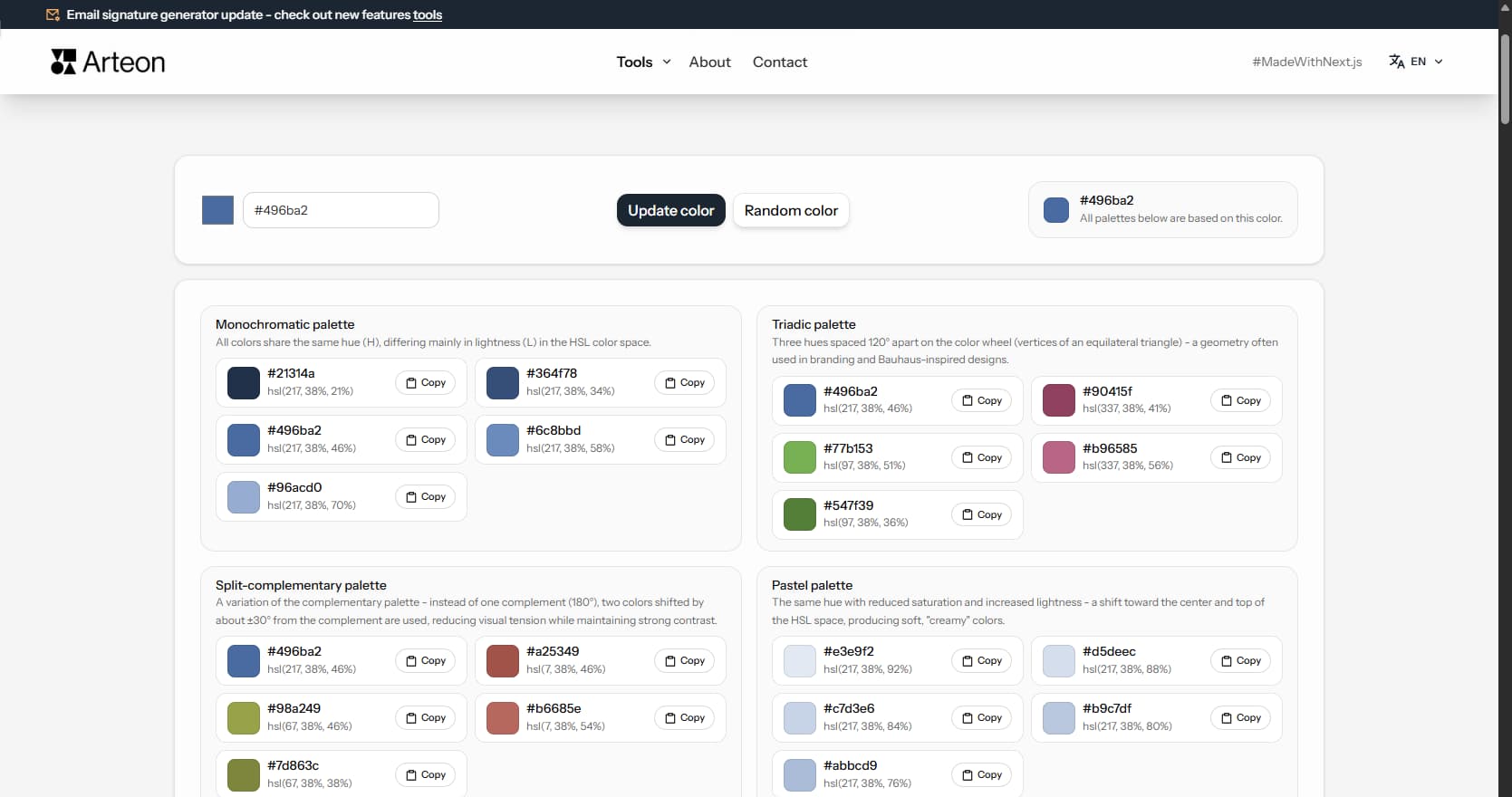
Generate 9 palettes from one color: monochromatic, complementary, triadic and more. HEX codes.
Convert WebP files to universally compatible JPG. Works in every app and platform.
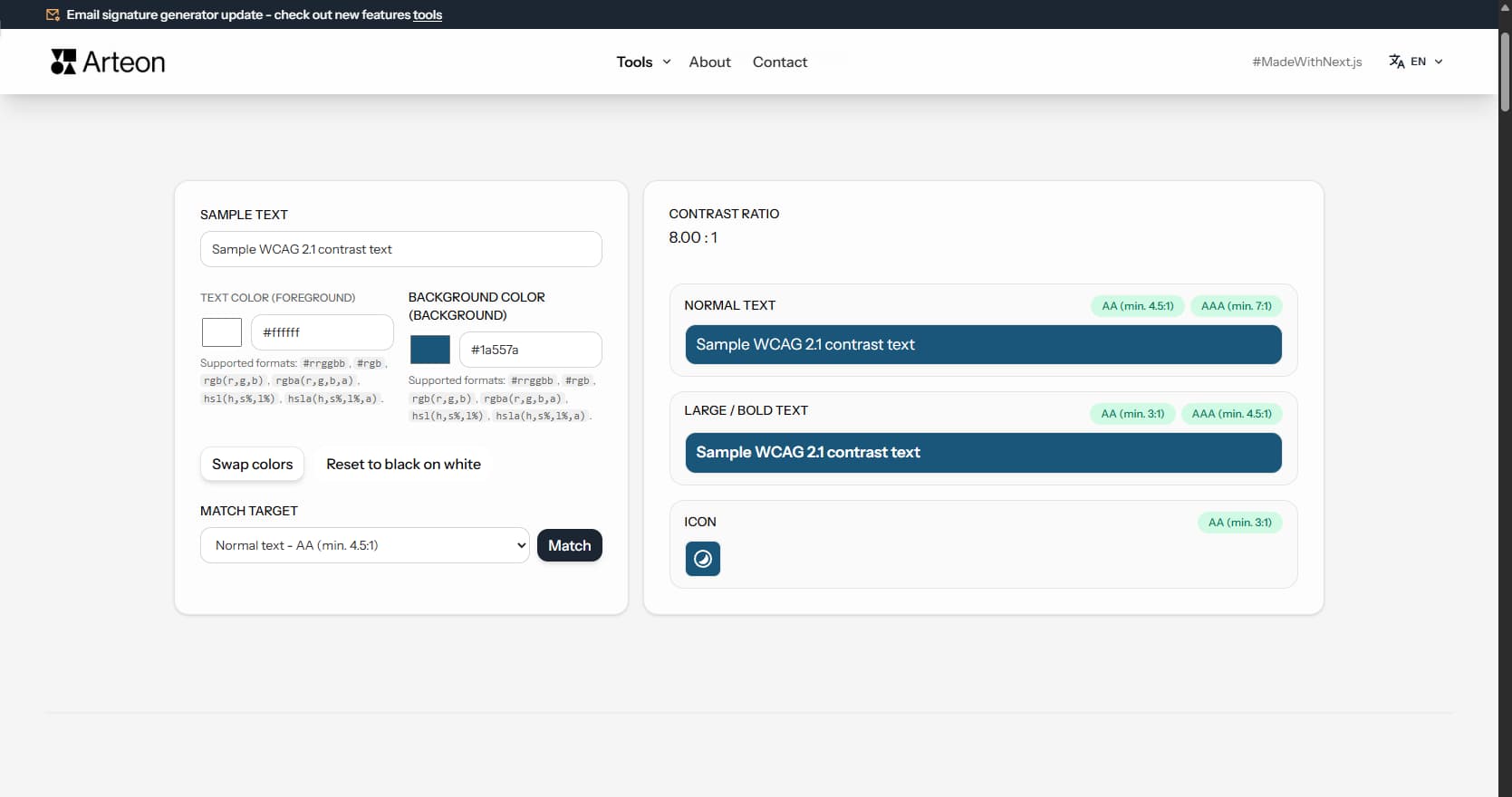
Check text and background contrast per WCAG 2.1 AA and AAA. Automatic color correction.

Create a QR code for a website, vCard business card or print. Export PNG and SVG, no registration.
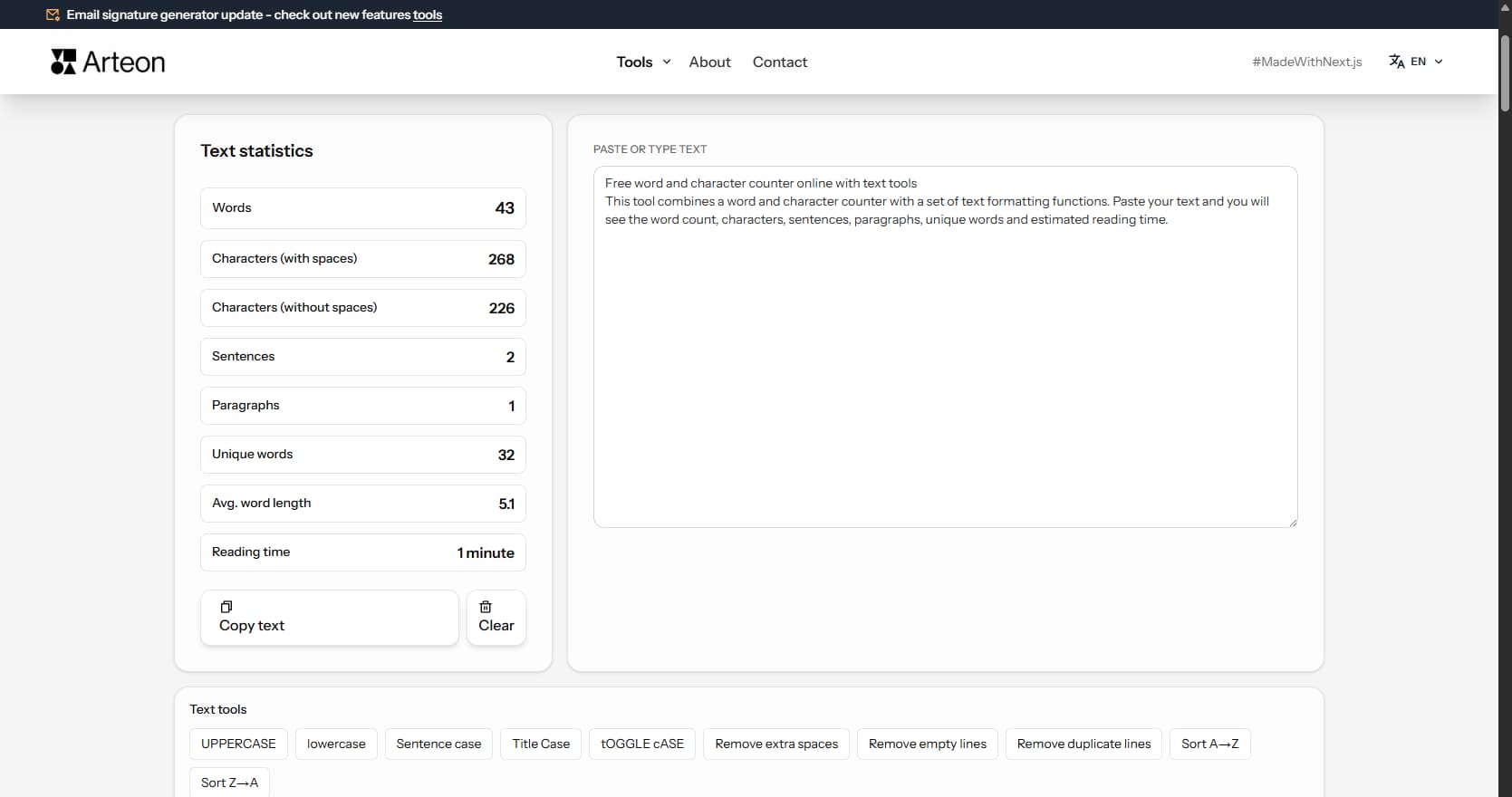
Count words, characters, sentences and reading time. Check readability with the Flesch-Kincaid score.