Comparing two pack sizes
One pack holds 400 grams, the other 750, and both prices are per item. Comparing them needs the price per kilogram, which needs the mass in kilograms: 0.4 and 0.75. The package weights are listed in the table above.
A gram is one thousandth of a kilogram, written 0.001 kg. Type a value in grams and the result appears as you go. The field accepts fractions and decimals. Further down you will find package weights and a way to do this in your head.
A gram is 0.001 kilograms, one thousandth. To go from grams to kilograms you divide by a thousand: kilograms = grams ÷ 1,000.[1]
This direction comes up when a figure arrives in grams and something else wants kilograms. Shipping forms, price per kilogram and school exercises all work that way.
Where the gram came from, why the kilogram is the base unit and where grams turn up if you weigh in pounds are covered on the kilograms to grams converter page.
Move the decimal point three places to the left. Five hundred grams gives 0.5 kilograms, 250 grams gives 0.25 kilograms and 1,200 grams gives 1.2 kilograms. When the number has no decimal point, put one at the end and then shift it.
Below a hundred grams a zero appears after the point: 50 grams is 0.05 kilograms and 40 grams is 0.04 kilograms. Remembering one example of that shape settles the rest.
You can check any answer by going back the other way. Since 0.4 kilograms multiplied by a thousand gives 400 grams, the conversion held. That direction runs in the kilograms to grams converter.
For a single figure the mental version is quicker. For a shopping list or a spreadsheet column, the converter above saves the counting.
The line sits at roughly one kilogram and comes down to how the number reads. Below a kilogram grams keep things whole: 250 grams of butter sounds ordinary, while 0.25 kilograms of butter reads like a specification.
Above a kilogram it flips. A bag of cement is 25 kilograms, even though 25,000 grams describes the same mass. That is why food labels work in grams while parcels, luggage and building materials work in kilograms.
Nutrition figures follow their own rule. They are always quoted per 100 grams regardless of pack size, because a shared basis is what makes two products comparable. For the whole package, divide its mass by a hundred and multiply by the figure on the label.
If the mass is heading onto a form that expects imperial units, the kilograms to pounds converter and the pounds to ounces converter take it from there.
Converting grams to kilograms keeps every digit, because dividing by a thousand only moves the decimal point. A reading of 847 grams gives 0.847 kilograms to the gram.
The gap opens on the display. A kitchen scale usually resolves to one gram, a bathroom scale to a hundred, which is 0.1 kilograms. The same parcel therefore shows 847 grams on one and 0.8 kilograms on the other.
Packaging accounts for the rest. Manufacturers state net mass, the product alone, while a scale at home weighs it together with the jar or the bag. With preserves the glass can outweigh what is inside it.
For comparing products, the label figure is the one to trust. The common package weights are collected in the table below.
The table covers the values that come up most often in this conversion, from one gram to ten kilograms. Weights found on packaging are highlighted.
| Grams | Kilograms |
|---|---|
| 1 g | 0.001 kg |
| 2 g | 0.002 kg |
| 5 g | 0.005 kg |
| 10 g | 0.01 kg |
| 15 g | 0.015 kg |
| 20 g | 0.02 kg |
| 25 g | 0.025 kg |
| 30 g | 0.03 kg |
| 40 g | 0.04 kg |
| 50 g | 0.05 kg |
| 60 g | 0.06 kg |
| 70 g | 0.07 kg |
| 75 g | 0.075 kg |
| 80 g | 0.08 kg |
| 90 g | 0.09 kg |
| 100 g | 0.1 kg |
| 110 g | 0.11 kg |
| 120 g | 0.12 kg |
| 125 g | 0.125 kg |
| 150 g | 0.15 kg |
| 175 g | 0.175 kg |
| 180 g | 0.18 kg |
| Grams | Kilograms |
|---|---|
| 200 g | 0.2 kg |
| 220 g | 0.22 kg |
| 225 g | 0.225 kg |
| 250 g | 0.25 kg |
| 275 g | 0.275 kg |
| 300 g | 0.3 kg |
| 330 g | 0.33 kg |
| 350 g | 0.35 kg |
| 375 g | 0.375 kg |
| 400 g | 0.4 kg |
| 425 g | 0.425 kg |
| 450 g | 0.45 kg |
| 500 g | 0.5 kg |
| 550 g | 0.55 kg |
| 600 g | 0.6 kg |
| 650 g | 0.65 kg |
| 700 g | 0.7 kg |
| 750 g | 0.75 kg |
| 800 g | 0.8 kg |
| 850 g | 0.85 kg |
| 900 g | 0.9 kg |
| 950 g | 0.95 kg |
| Grams | Kilograms |
|---|---|
| 1,000 g | 1 kg |
| 1,100 g | 1.1 kg |
| 1,200 g | 1.2 kg |
| 1,250 g | 1.25 kg |
| 1,500 g | 1.5 kg |
| 1,750 g | 1.75 kg |
| 2,000 g | 2 kg |
| 2,200 g | 2.2 kg |
| 2,500 g | 2.5 kg |
| 3,000 g | 3 kg |
| 3,500 g | 3.5 kg |
| 4,000 g | 4 kg |
| 4,500 g | 4.5 kg |
| 5,000 g | 5 kg |
| 6,000 g | 6 kg |
| 7,000 g | 7 kg |
| 7,500 g | 7.5 kg |
| 8,000 g | 8 kg |
| 9,000 g | 9 kg |
| 10,000 g | 10 kg |
Starting from kilograms instead? Head to the kilograms to grams converter, where recipe amounts are shown next to ounces.
The masses printed most often on food packaging, converted to kilograms. Useful when working out price per kilogram or comparing two pack sizes.
| Package weight | Kilograms |
|---|---|
| 100 g | 0.1 kg |
| 125 g | 0.125 kg |
| 150 g | 0.15 kg |
| 180 g | 0.18 kg |
| 200 g | 0.2 kg |
| 250 g | 0.25 kg |
| 300 g | 0.3 kg |
| 330 g | 0.33 kg |
| Package weight | Kilograms |
|---|---|
| 350 g | 0.35 kg |
| 400 g | 0.4 kg |
| 450 g | 0.45 kg |
| 500 g | 0.5 kg |
| 600 g | 0.6 kg |
| 700 g | 0.7 kg |
| 750 g | 0.75 kg |
| 800 g | 0.8 kg |
| Package weight | Kilograms |
|---|---|
| 900 g | 0.9 kg |
| 1,000 g | 1 kg |
| 1,200 g | 1.2 kg |
| 1,500 g | 1.5 kg |
| 2,000 g | 2 kg |
| 2,500 g | 2.5 kg |
| 3,000 g | 3 kg |
| 5,000 g | 5 kg |
Price per kilogram comes from dividing the pack price by its mass in kilograms. A 400 gram pack is 0.4 kilograms, so the price is divided by 0.4.
Four situations where a value in grams is more useful in kilograms.
Every figure in the tables was computed from the unit definitions and checked arithmetically before publication. Historical values and the names of local units come from the sources listed above.
Content last reviewed: · written and checked by the Arteon team
A gram is 0.001 kilograms, one thousandth of a kilogram. The other way round, a kilogram holds 1,000 grams.
100 grams is 0.1 kilograms, one tenth of a kilogram. It is also the basis manufacturers use for nutrition figures on labels.
500 grams is 0.5 kilograms, half a kilo. It is the most common pack size on a supermarket shelf.
2,000 grams is 2 kilograms. The arithmetic is 2,000 ÷ 1,000. In the same way 2,500 grams gives 2.5 kilograms and 1,500 grams gives 1.5 kilograms.
50 grams is 0.05 kilograms. Below a hundred grams a zero appears after the decimal point, because the shift is three places to the left.
Move the decimal point three places to the left. When the number has no decimal point, put one at the end first. So 750 grams gives 0.75 kilograms and 40 grams gives 0.04 kilograms.
The formula is: kilograms = grams ÷ 1,000. The other way round: grams = kilograms × 1,000. Both are exact.
Yes. The prefix "kilo" means a thousand, so a kilogram contains a thousand grams by definition. That relationship stayed intact when the kilogram itself was redefined in 2019.
The kilogram, by a factor of a thousand. Grams describe single ingredients or the weight of a letter, while kilograms describe people, luggage and freight.
One ounce holds 28.35 grams, so 500 grams comes to about 17.6 ounces. The kilograms to grams converter carries a table pairing common gram amounts with their ounce equivalents.
1,000 milligrams is 1 gram, which is 0.001 kilograms. Milligrams appear mostly on medicine and supplement packaging, where the amounts are too small for grams to describe neatly.
Divide the pack price by its mass in kilograms. A 400 gram pack is 0.4 kilograms, so the price is divided by 0.4. The package weights table above lists the usual sizes.
Because a shared basis is what lets two products be compared, whatever their pack size. To get the figure for a whole package, divide its mass by a hundred and multiply by the number on the label.
If you spot an error in the tables or have an idea for improving the converter, write to us. We answer every message.
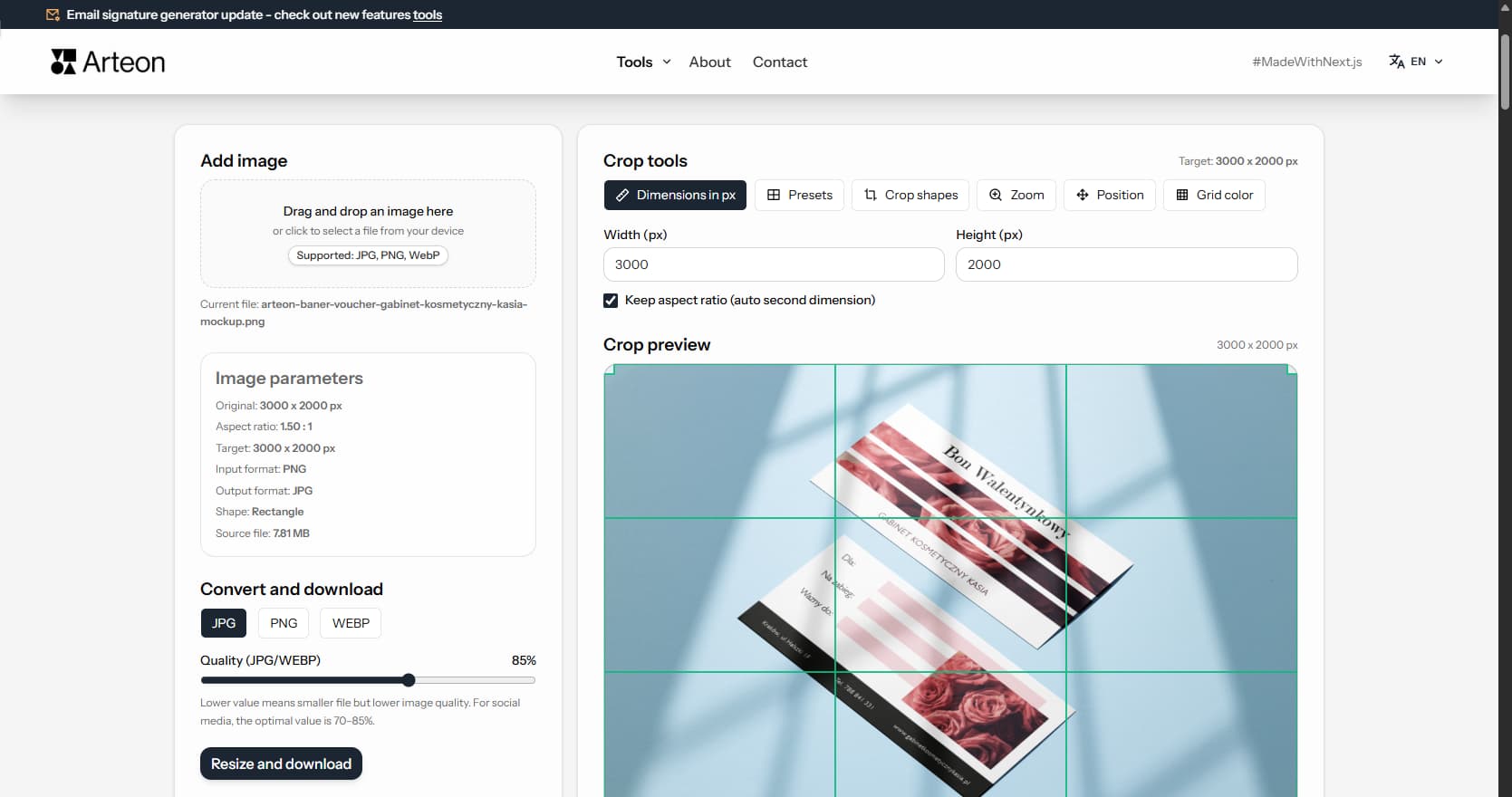
Resize, crop and convert your image. Ready-made formats for social media, circular avatars, export to JPG/PNG/WebP.

Check title and description length in pixels. Live Google preview and optimization tips.
Convert PNG files to JPG in your browser. No file limits, no signup, no server uploads.
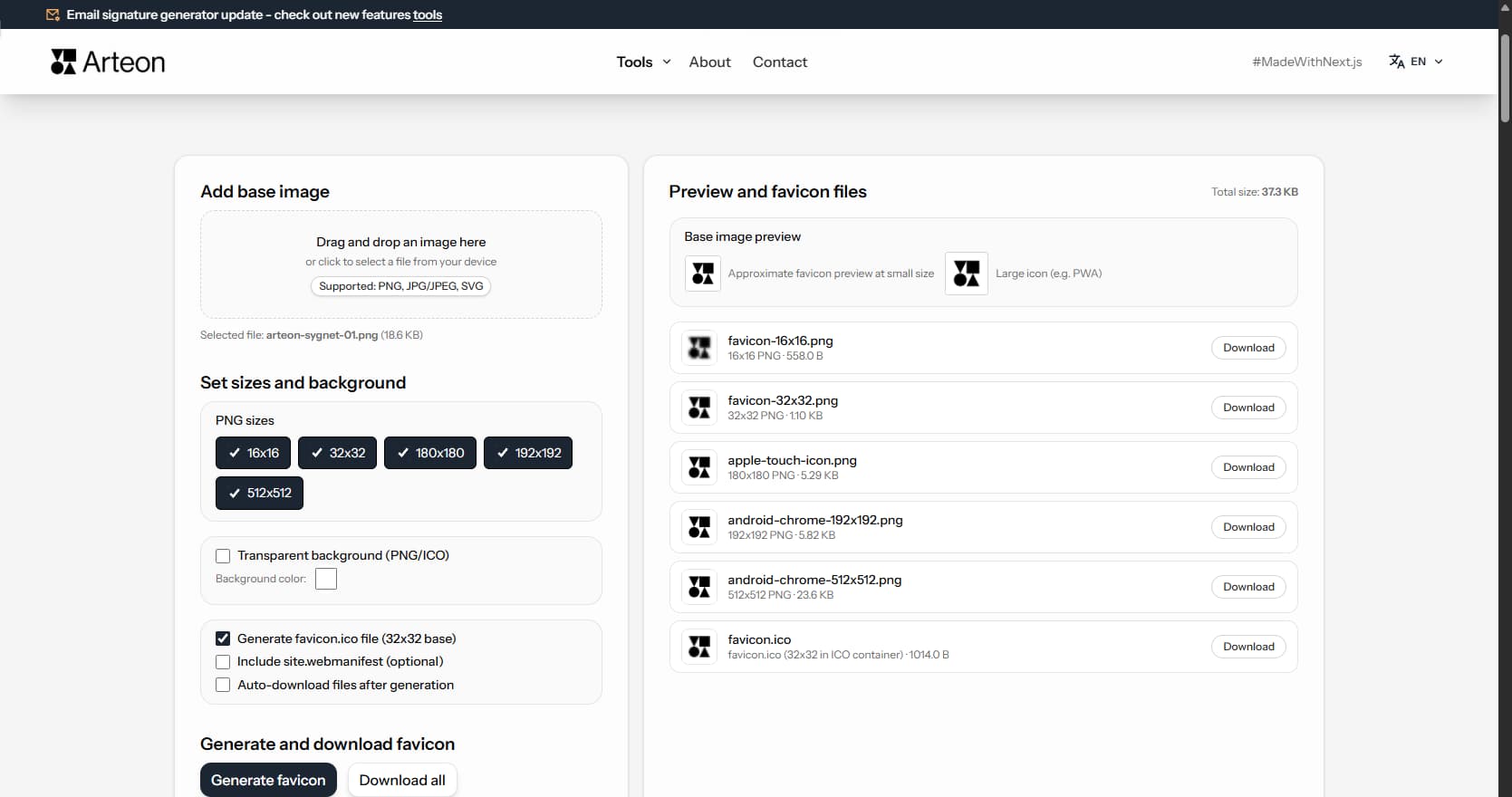
Create a complete favicon.ico set for your website from one image. All required sizes, no login.
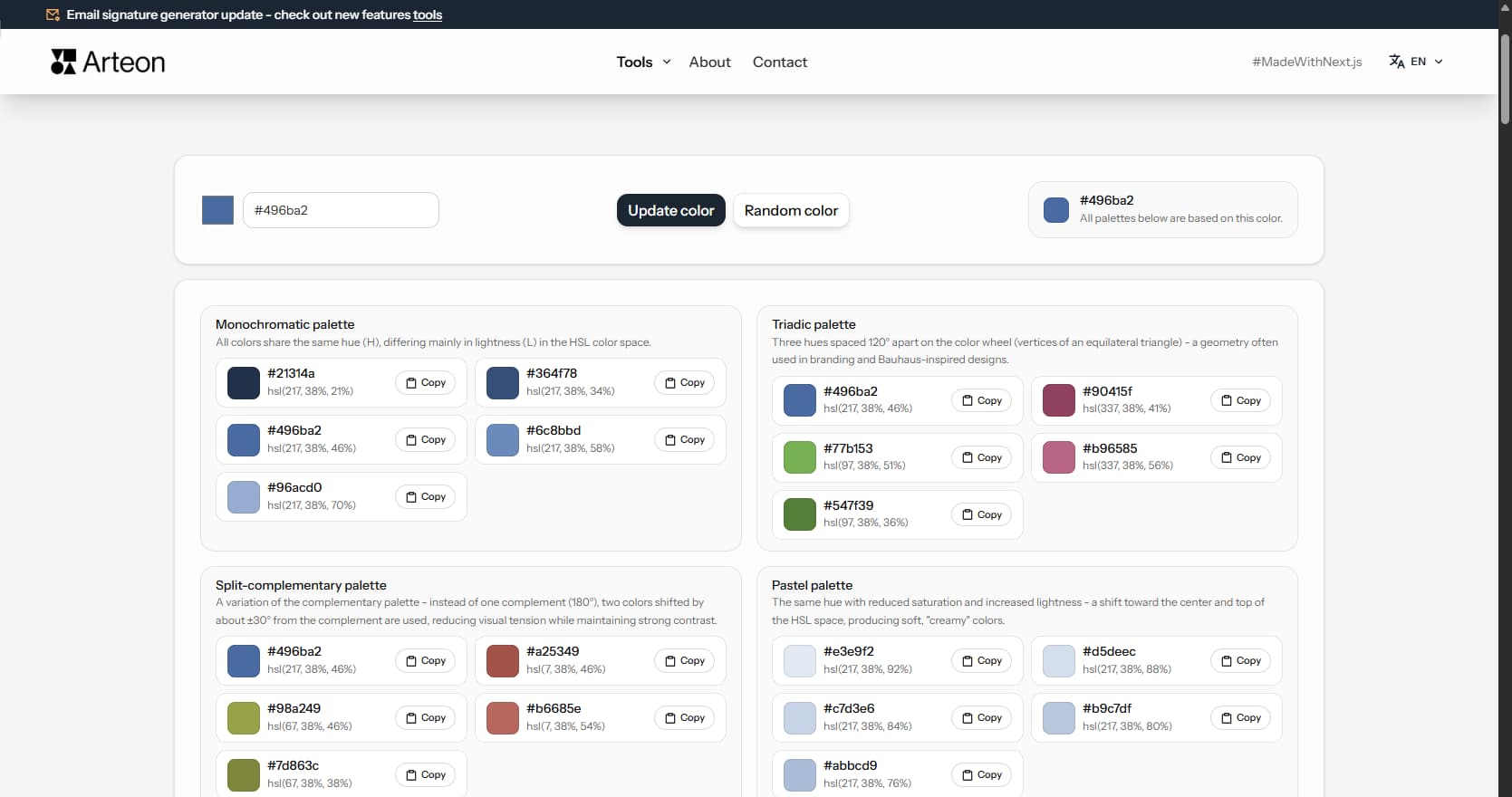
Generate 9 palettes from one color: monochromatic, complementary, triadic and more. HEX codes.
Convert WebP files to universally compatible JPG. Works in every app and platform.
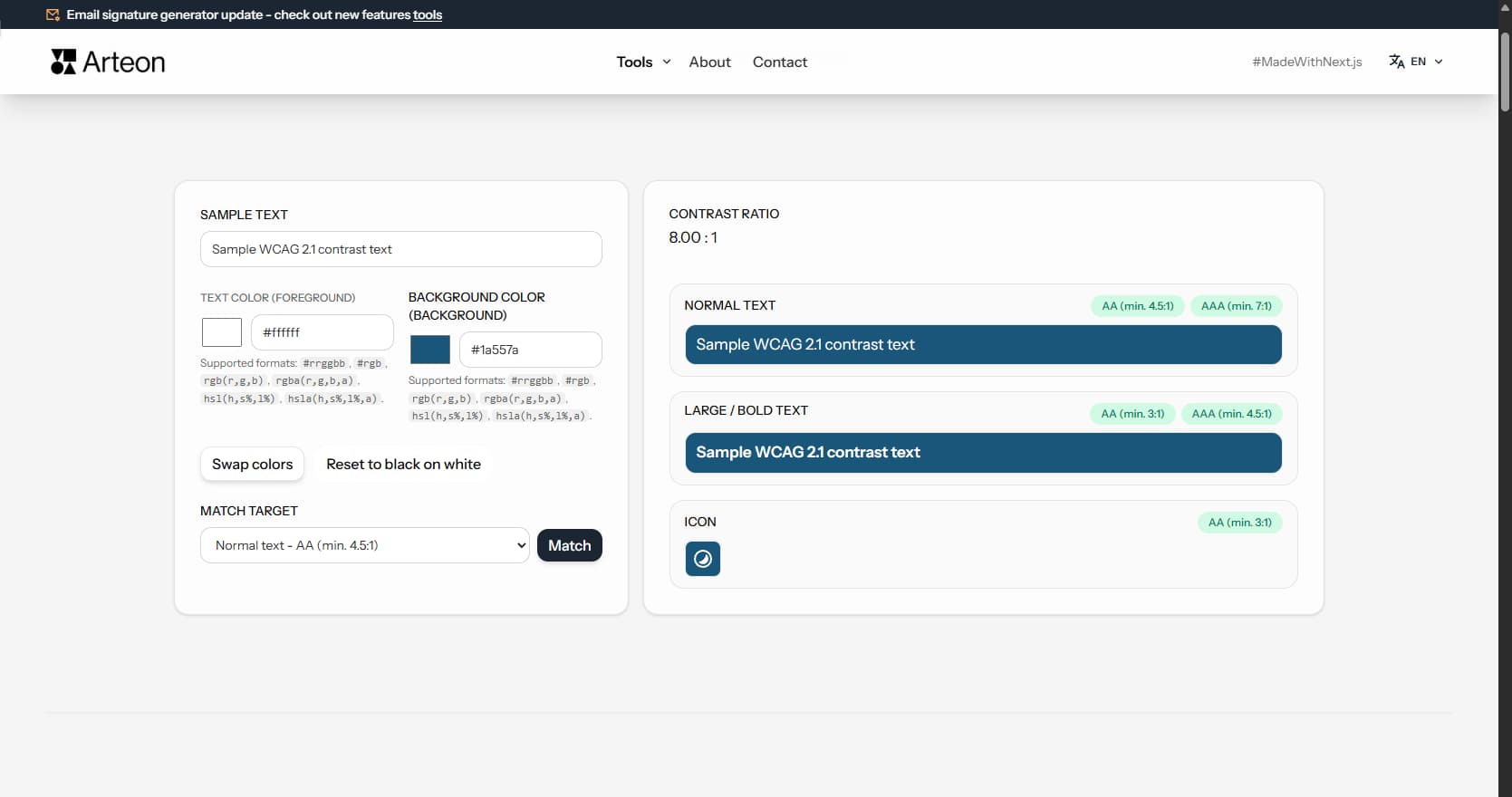
Check text and background contrast per WCAG 2.1 AA and AAA. Automatic color correction.
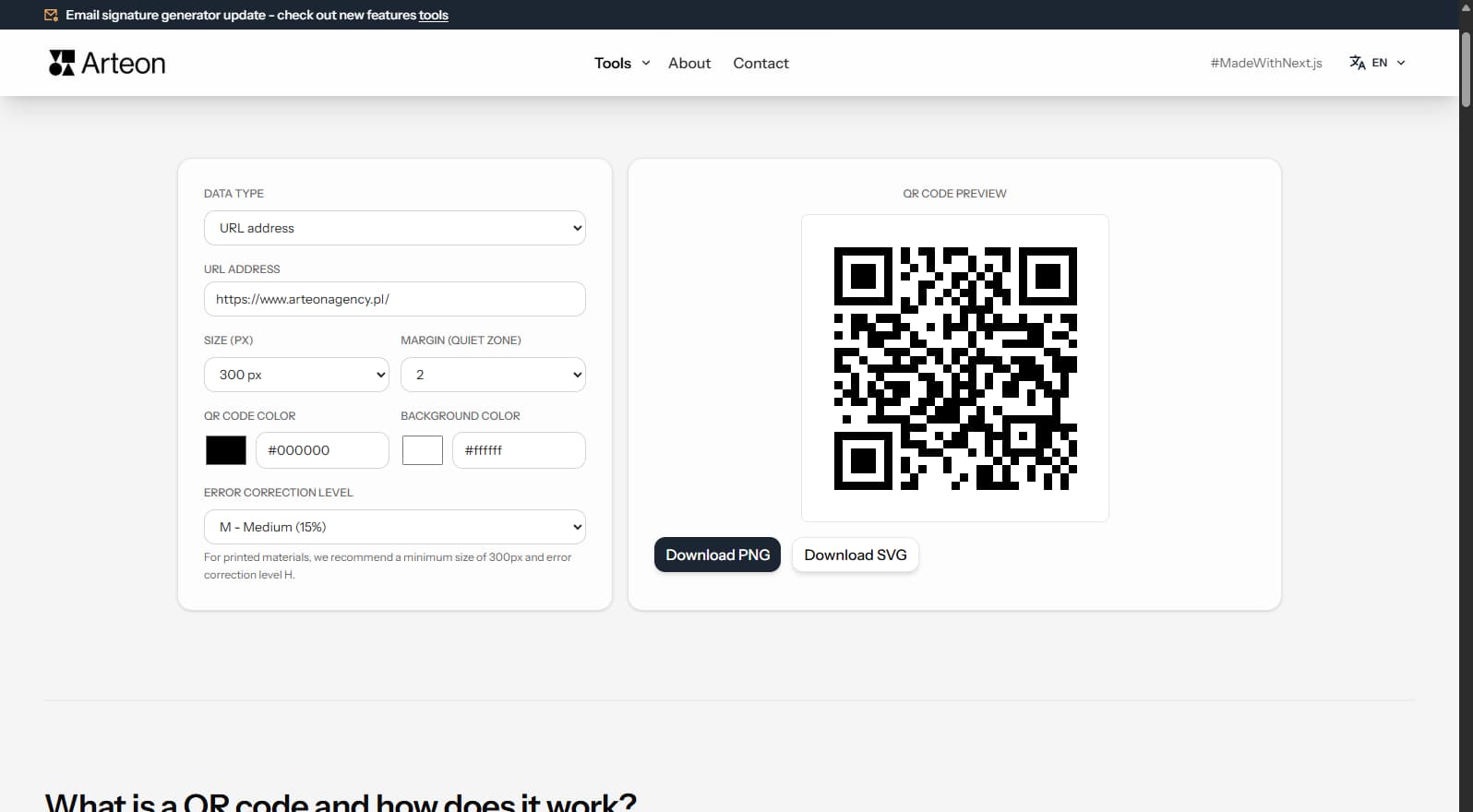
Create a QR code for a website, vCard business card or print. Export PNG and SVG, no registration.
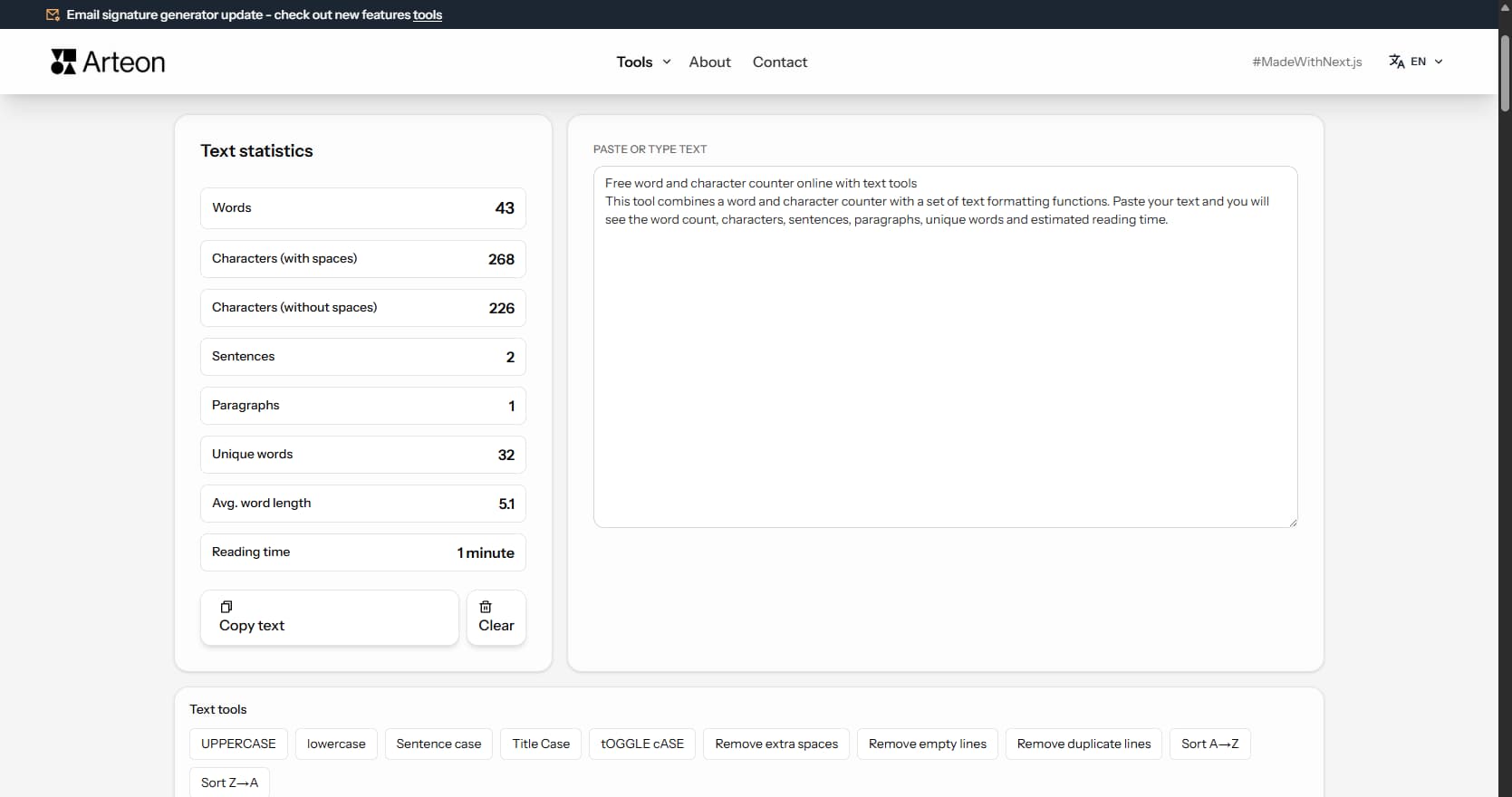
Count words, characters, sentences and reading time. Check readability with the Flesch-Kincaid score.